
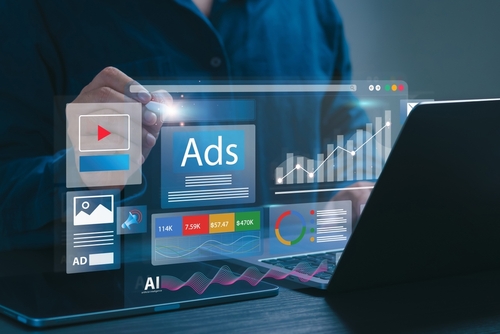
 Social media has evolved from a simple networking platform to a powerful business tool. Businesses today use these platforms with billions of active users worldwide to connect with their target audience. Social media allows businesses of all sizes to reach audiences in a way that traditional advertising, such as print or television, cannot.
The Role of Social Media Marketing in Business Growth
Social media marketing uses social media platforms such as Facebook, LinkedIn, Instagram and TikTok to promote a business’ products or services. This is done through sharing content like posts, videos and ads to engage a targeted audience and eventually make sales.
With 5.22 billion social media users as of October 2024, businesses can reach customers around the world with ease. The platforms are also suitable for sharing information, enabling companies to communicate with customers about promotions, events or new products or services.
Each platform offers different strengths, and a business can choose which ones suit its target audience. For instance, LinkedIn is more professional and a good platform for B2B opportunities. On the other hand, TikTok and Instagram are suitable for visual storytelling, making them good places to showcase products.
Benefits of Social Media Marketing
Some of the key benefits of marketing on social media include the following:
- Increased Brand Awareness
Consistently and strategically posting on social media enhances brand visibility. A brand gains recognition as users engage with the content through likes, comments, and shares. Content that goes viral expands a business’ reach, introducing new audiences to the brand. - Improved Customer Engagement
Social media gives businesses a direct line to customers. Whether replying to comments or through direct messages, these interactions help build trust and create a sense of loyalty. This two-way communication gives businesses a better understanding of customers’ needs while also allowing them to respond quickly to inquiries and feedback. - Cost-Effective Advertising
Unlike traditional advertising, social media offers cost-effective marketing solutions. With social media, a business can run targeted ads based on demographics, interests or behaviors. This ensures they reach the right audience without wasting resources. This makes it possible for small businesses to leverage paid campaigns to increase their reach while staying within their budget. - Measurable Results and Analytics
Social media marketing offers the ability to measure results through built-in analytic tools. A business can monitor follower growth, engagement rates, link clicks, and conversions. Such data-driven insights help businesses identify what is working, fine-tune their strategies, and continuously improve their campaigns. - Drive Website Traffic and Sales
Sharing links to a business website on social media drives traffic to the site and increases conversions.
Social Media Strategies that Help in Business Growth
- Content Marketing
Creating engaging content is crucial in social media marketing. This involves using text, videos, images and infographics to capture the audience’s attention. One powerful tool in content marketing is storytelling – using emotional and relatable stories to connect with audiences will enhance loyalty and trust. - Influencer Marketing
Influencers have huge followings, and their endorsements can significantly help a business. However, partnering with the right influencer is important to attract new customers and boost credibility. - Paid Ads and Promotions
With paid ads, a business targets specific audiences in terms of location, age and interests. Social media also enables retargeting campaigns, which remind users about products they have previously viewed. - Community Building
Social media allows a business to create a community for long-term relationships. This is done through creating groups or pages. These communities develop a sense of belonging, and customers are more likely to engage with the business over time and recommend it to others.
Challenges and How to Overcome Them
- Staying Relevant in a Crowded Space
Many businesses compete for customer attention, and standing out can be challenging. Therefore, businesses should keep up with social media trends, experiment with new formats and regularly update their strategies to align with changing consumer preferences. - Managing Negative Feedback Publicly
Businesses may face criticism or negative feedback. Handling these situations professionally is crucial. It calls for prompt responses that show empathy and a willingness to resolve issues. This demonstrates accountability, which can turn a negative experience into an opportunity to build trust. - Creating Consistent Content
Maintaining a steady flow of content can be overwhelming, especially for small businesses. Content calendars and automation tools can help plan posts in advance, ensuring consistent engagement without added stress. Repurposing existing content across platforms is another way to save time and effort.
Conclusion
Social media marketing has become a game-changer for businesses seeking growth in the digital age. It provides cost-effective ways to build brand awareness, engage with customers, and measure real-time success. However, success requires more than just presence – it demands strategic planning, creativity, and adaptability to overcome challenges and maintain relevance.




 It’s that time of year again. Halloween has just come and gone – and now we’re hurtling headlong into Thanksgiving and Christmas. For holiday shopping, it’s tempting to turn a blind eye and put everything on your credit cards. However, if you don’t want to have a financial hangover in January, February (and so on), you might want to take a look at these tips.
 Step 6: Looking to Legacy Planning to Address Future Needs of Family
 This metric, which is also referred to as the cash cycle or the net operating cycle, looks at the time a business takes to recover its investment in inventory to eventually sell. The process starts from selling its goods, collecting on outstanding receivables or invoices, and satisfying its operating costs with the sale proceeds. It’s normally measured in days to determine the company’s financial health.
 According to estimates, inflation adjustments to the Internal Revenue Code are expected to yield increases of 2.8 percent compared to 2024 amounts. This means wider tax brackets and increased exemptions, among other things. With the U.S. Bureau of Labor Statistics consumer price index (CPI) moderating, this increase is about 50 percent less than 2024’s inflation adjustment. Below, we’ll look at what the projected 2025 inflation adjustment means in terms of dollars and cents for you and your taxes.
 With more than 14 million electric vehicle (EV) registrations in 2023 worldwide and 2023 seeing an increase in EV sales over 2022 by 35 percent, manufacturers are probably happy – but not those producing the traditional internal combustion engine (ICE) vehicles. This is according to the International Energy Agency’s Global EV Outlook 2024: Trends in Electric Cars.
 Continuing Appropriations and Extensions Act, 2025 (HR 9747) – This continuing resolution was introduced on Sept. 22 as a “clean” extenuation of the federal budget to fund the government until Dec. 20. Up until this point, a handful of Republicans had attached unrelated bills pertaining to November election restrictions, which they did not have the votes to pass in the House and would never have passed in the Senate. After several weeks of threatening to shut down the government by not passing a continuing appropriations bill, the House Speaker proposed this “last-minute” tied over with the minimum appropriations necessary to keep the government up and running. While it still does not solidify the federal budget for the 2025 fiscal year (Sept. 29, 2024, through Sept. 27, 2025), this bill is expected to pass in the House on Sept. 25 and to clear the Senate and be signed by the president by Sept. 29.
 As technology evolves, so have data breaches, which have become a significant threat to businesses of all sizes. We frequently hear reports of high-profile attacks on major organizations, global corporations, and even government agencies. Emerging technologies such as generative artificial intelligence and machine learning make cybersecurity more challenging. They enable cybercriminals to automate attacks, create sophisticated phishing schemes, and develop advanced malware to evade traditional security measures. Hence, companies have no choice but to change how they approach cybersecurity.
 Annuities are one of many products that folks have in their nest egg. But first, what exactly is an annuity?
 Step 5: Estate Plan